
Searching St. Louis County Criminal Dockets
Minnesota Court Records Online, or MCRO gives the public remote access to St. Louis County District Court cases. Open the Case Search function and accept the terms. Then pick the tab that fits what you have: Name, Case Number, Citation Number, or Attorney. A name search can be narrowed several ways. Filter by filing date, category, status, and the St. Louis County court location. Before treating a result as the right case, check the party role, court location, case type, and date.
The full Minnesota case number is the better route for a known criminal matter. MCRO takes dashes and leading zeros. It will not accept an incomplete case number. A citation number also works for a cited offense. Results open into Case Details. The Register of Actions gathers public filings, hearings, orders, and documents in one place. When remote access falls short, a courthouse terminal is the next option.
- Open MCRO and choose the Case Search function after accepting the public-access terms.
- Select Case Number when a notice, citation, order, or prior record supplies the complete identifier.
- For a name search, add the known first name and choose St. Louis County as the court location when possible.
- Open Case Details and match the location, party role, category, and filing date before reading events.
- Use the court administration office or a public terminal if the needed public record is absent or certification is required.
Note: A name result is only a lead. Confirm the case number, role, location, and dates against the matter you are tracking before relying on it.
St. Louis County Criminal Name Limits
Rule 8.2(c) tells the public-access system to block defendant-name searches for pending criminal cases. The block is deliberate. A name that returns nothing in the St. Louis County criminal docket does not mean no case exists, so treat a blank result as a search limit rather than a court failure. When a name comes up empty, try a full case number, a citation number, or an attorney search instead. You can also ask court administration in person at Duluth, Hibbing, or Virginia, which works for records the docket search will not return by name.
The Rule 8 public-access text shows the full scheme. Beyond the name-search limit on pending matters, remote access is also restricted for protected case categories and personal identifiers. A name can be missing for several reasons. Confidentiality, older court records, indexing gaps, and case type all play a part, so the court's own record, not a broad name match, is what confirms a case.
For a look at how prosecutions move forward, the St. Louis County Attorney criminal-prosecution page lays out that office's role.
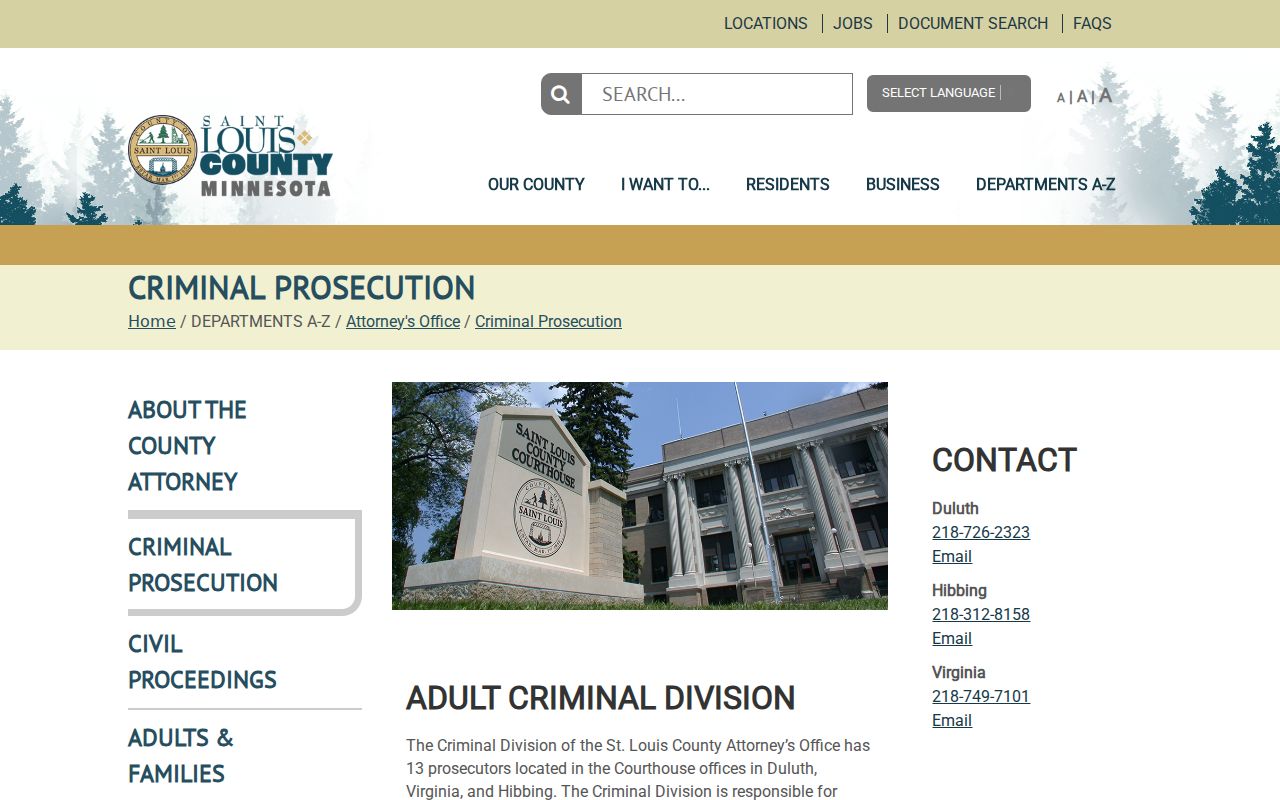
The County Attorney's published criminal role explains the split: the charging office and the court record serve different functions. The Register of Actions stays with court administration.
Inside a St. Louis County Criminal Docket
Case Details is MCRO's main public view. A criminal Register of Actions there can show the case number, filing or origination date, court location, category, status, party roles, attorney information, judicial officer, events, and documents. Scheduled settings, bond or bail activity, fines, fees, payments, credits, and judgment details may appear too, when public. Trust the label and date on the record over any guessed abbreviation.
Read criminal events in order. Charging is not a plea. A calendar line is not a disposition. A payment record does not explain the case, and a document index can list a filing with no public document attached, which may reflect access limits rather than a missing item.
| Case number | The strongest exact lookup key. Enter the complete Minnesota number, such as XX-CR-00000, without inventing a local short-code meaning. |
|---|---|
| Location and type | Confirms the St. Louis County facility and that the record is a criminal matter. |
| Case events | The dated Register of Actions entries for filings, hearings, orders, and later activity. |
| Setting details | Date, time, location, judicial officer, hearing type, and connection information when supplied. |
| Financial and bail fields | Public bond, bail, fines, fees, payments, credits, or judgment details where displayed. |
Note: Event labels and attached documents vary by record. For exact wording, the live case entry is the source.
How a Criminal Case Moves
A criminal Register of Actions tells its story through dated entries, not one summary line. The typical sequence starts with filing or charging. It moves to first appearance or arraignment, then bail or bond activity. Motions follow, along with an omnibus or pretrial event, plea or trial, and sentencing or another disposition. Judgment or financial entries come later where public. Read entries in that order. A new entry can change how an earlier one reads.
Criminal event path: Filing or Charge → First Appearance or Arraignment → Bail or Bond → Motion or Omnibus → Plea or Trial → Disposition → Sentencing or later financial event.
A reference image from the Minnesota Criminal Rule 6 page is included here.
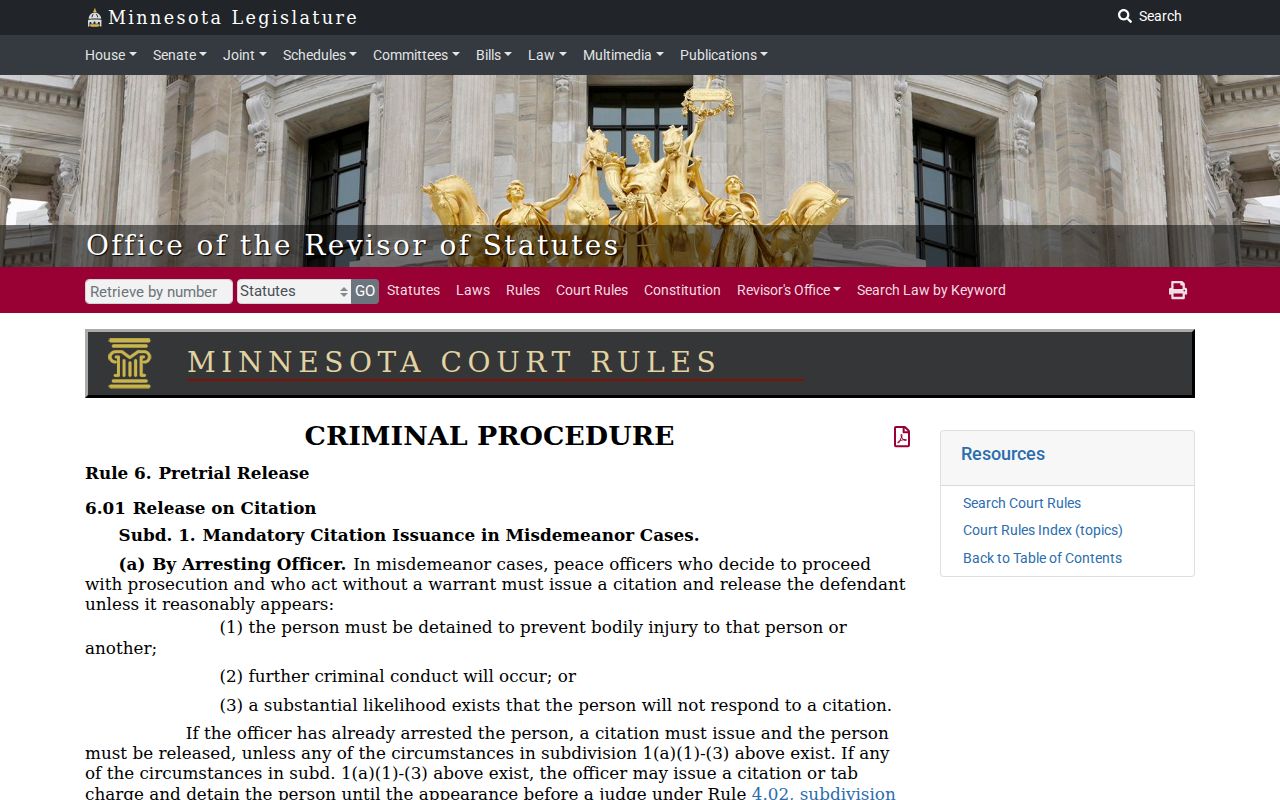
Rule 6 sets the statewide citation and appearance framework. Its deadlines can drive events in a St. Louis County criminal case.
St. Louis County MCRO Criminal Tools
MCRO splits its tools into Case Search, Document Search, Hearing Search, and Judgment Search. Case Search is the usual start for a criminal Register of Actions. Hearing Search finds a setting several ways. It searches by person or business, case number, judicial officer, attorney, or bar number. Document Search requires a case number. It shows only qualifying public documents. Each tool has a narrow job. A missing attachment or calendar line does not describe the whole criminal case.
The Name tab takes a last and first name, plus options. Add a middle name, pick a Sounds Like choice, or use a wildcard after at least two characters. The Case Number tab accepts complete Minnesota numbers, dashes and leading zeros included. Setting the court location to St. Louis County can narrow a broad result. In pending matters, the name-search protection still applies. Use the known case number or the courthouse public terminal where lawful access is needed.
Courts That Hold Criminal Dockets
Criminal cases in St. Louis County, Minnesota, belong to the state's Sixth Judicial District. The Minnesota District Court there handles both. Felonies and misdemeanors alike land in that trial court. Three full-service court-administration offices serve the county. They sit in Duluth, Hibbing, and Virginia. Think of them as branches of one trial-court system rather than three separate county courts. The case number and assigned courthouse tell you more than a party's home city.
Prosecution splits along offense levels. The St. Louis County Attorney brings adult felony cases plus some other charges. City attorneys handle the rest. Gross misdemeanors, misdemeanors, petty misdemeanors, and ordinance violations inside their own cities fall to them. That split changes who files the charge. It does not create a separate city criminal docket. Every filing still lands in the District Court's Register of Actions. The Duluth City Attorney criminal page lays out that local prosecution role.
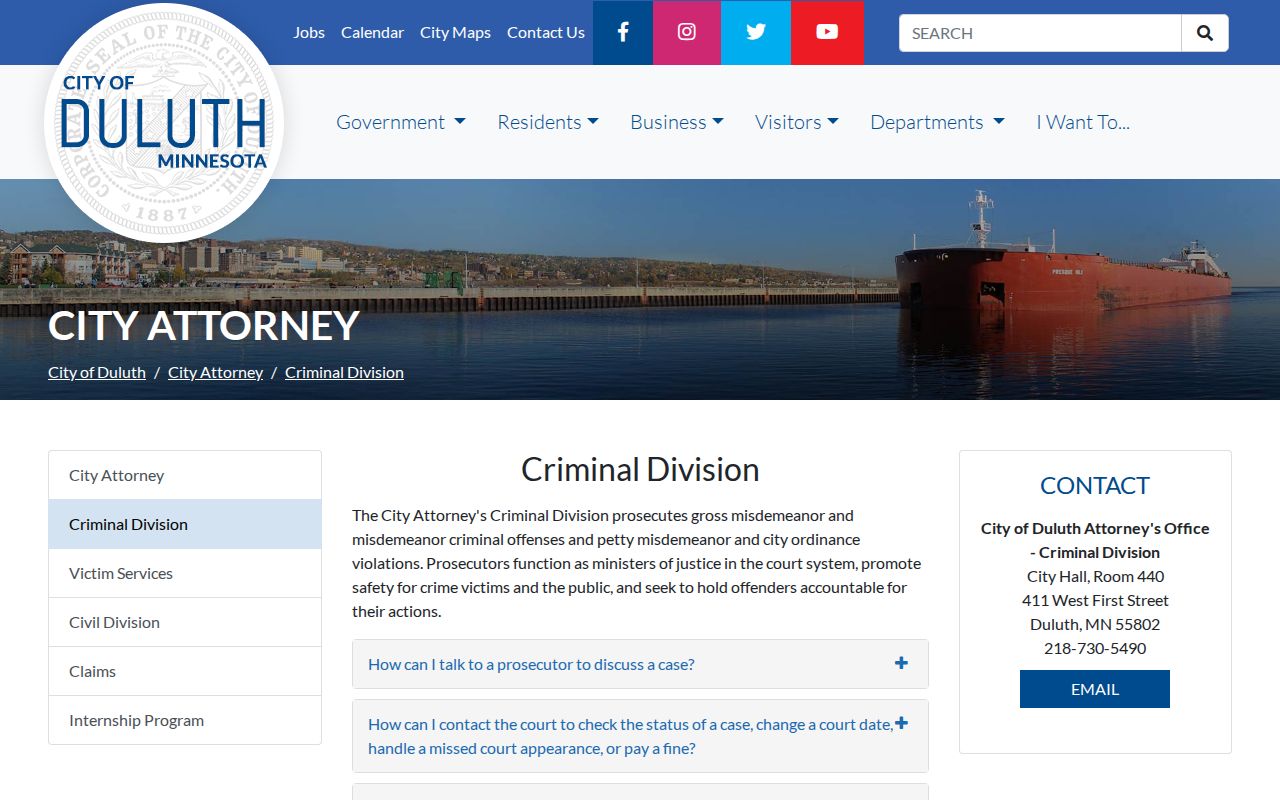
The city page draws a line between local prosecution work and felony prosecution. The docket itself lives with District Court administration, which maintains every court record event for the case.
St. Louis County Criminal Status Terms
Short labels on a St. Louis County docket can mislead you. Skipping the timeline is the usual cause. A complaint or a citation is just a charge. Dismissals, pleas, verdicts, stays, continuations for dismissal, sentencing entries, and judgments each appear later, in their own words. A calendar date shows only that a hearing was set. It never proves the hearing happened. Nor does it prove the case ended any particular way. Read the status words against the full chronological record before drawing any conclusion.
- Register of Actions
- The court’s chronological list of public filings, proceedings, and activities in a case.
- Arraignment
- A criminal proceeding addressing the charge and the next procedural steps.
- Disposition
- The recorded resolution of a charge or case, which must be read from the actual event or order.
- Bond or bail
- Financial or other release conditions that may appear in public case information.
- Continuance
- A change that moves a scheduled setting to a later date.
The Minnesota Criminal Rule 23 page is the official source behind the payable-citation process.
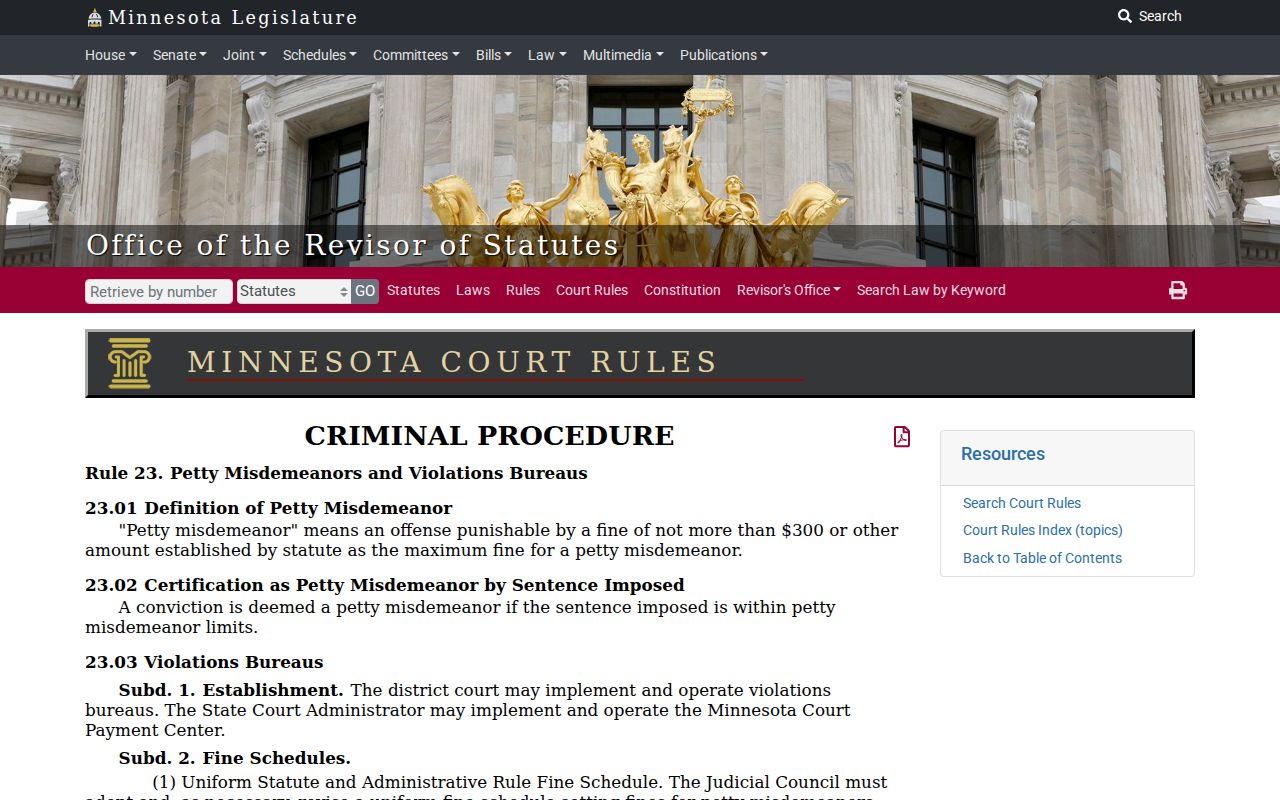
One more trap sits inside a payable citation. Under the rule, paying it can count as a guilty plea. So read the official notice and the docket entry together before you assume payment settled nothing.
Sealed Dockets and Public Access
Public access to a St. Louis County court record comes in layers. Rule 8 lets anyone inspect and copy court records at the custodian's office during regular hours. Privacy limits still apply. MCRO is not the whole file. The remote version drops protected identifiers. Categories such as family, juvenile, commitment, domestic-abuse, harassment, and certain treatment matters allow narrower access. A missing attachment is not an invitation to hunt for a workaround.
Juvenile records carry extra statutory limits. Minn. Stat. § 260B.163 keeps juvenile hearings closed. One narrow exception exists: certain public hearings for felony-level matters involving a child who is at least 16. What you may see depends on the statute, the rule, and any court order. The courthouse custodian can explain the lawful route to a specific record.
Public-access point: A Rule 7 request may be oral or written and must reasonably identify the record. A requester need not give a purpose. If access is delayed or denied, court administration should explain the problem and the supporting rule or law; a written explanation may be requested.
A reference image from the Minnesota juvenile-hearing statute is shown below.
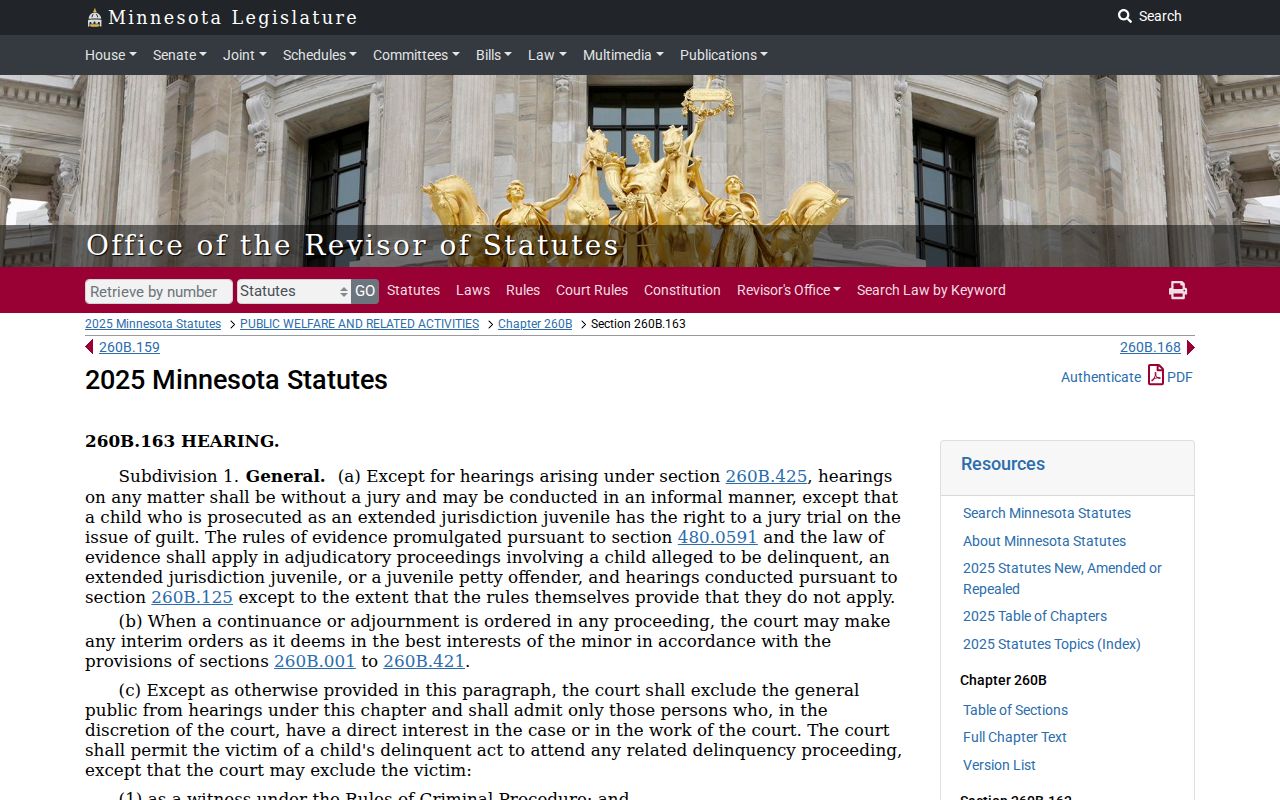
That juvenile statute carries a broader lesson. Protected court categories do not follow the ordinary public criminal docket workflow, so assume nothing without checking the rules that govern the record.
St. Louis County Criminal Warrant Checks
Warrant information moves fast. Official MCRO materials warn that an active-warrant flag on a party may tie to a different case entirely. Treat a flag as a lead, not an answer. Write down the exact case number. Then confirm current status with the court administration office handling the case. In Duluth, warrant questions go to the Court Administrator contact or courthouse Room 133. Hibbing and Virginia questions belong with each courthouse's administration office.
Remember what a St. Louis County docket screen does not tell you. A filing is not a conviction. A closed case is not one fixed outcome. The same status word can sit beside a dismissal, acquittal, diversion, stay, or conviction. When the remote record looks thin, do not guess from one screen. Use the public terminal or request the specific document through court administration. You can also run a full identifier through St. Louis County Case Lookup. Do that when the page is available.
St. Louis County Treatment Dockets
The Sixth Judicial District runs eight treatment courts. The list spans two parts of St. Louis County. North programs include Hybrid and Mental Health. South St. Louis County adds Drug, Veterans, DWI, and Mental Health programs. Every participant has an underlying Minnesota District Court criminal case number. MCRO can display the public register events from that case. Treatment plans, assessments, medical details, compliance records, and support documents are often limited or confidential.
The official Sixth District Treatment Courts page posts the program structure and contacts. A specialty calendar is not a treatment history. To follow a particular criminal docket event, keep the case number. Note which St. Louis County facility holds it. Then ask court administration about lawful access.
St. Louis County Criminal Record Fallbacks
MCRO leaves gaps, but St. Louis County offers more than one public channel. Duluth, Hibbing, and Virginia each keep a public-access records computer during published business hours. The published main number for Duluth is (218) 221-7560. For Hibbing it is (218) 274-6007, and for Virginia it is (218) 305-7021. You can also call local court administration. A Rule 7 request can be oral or written. Or file the Sixth District Copy Center's electronic request. Include the file number or year, a record description, copy count, and certification need. Staff will contact you for payment on copy orders.
Expungement works differently. It is a statutory court process, not a way to scrub an unwanted search result. Minn. Stat. § 609A.03 sets the petition requirements, including case and identity information. Eligibility and effect call for current legal guidance. A sealed, expunged, restricted, or merely unfound record each carries very different access rules. The Minnesota expungement statute spells this out.
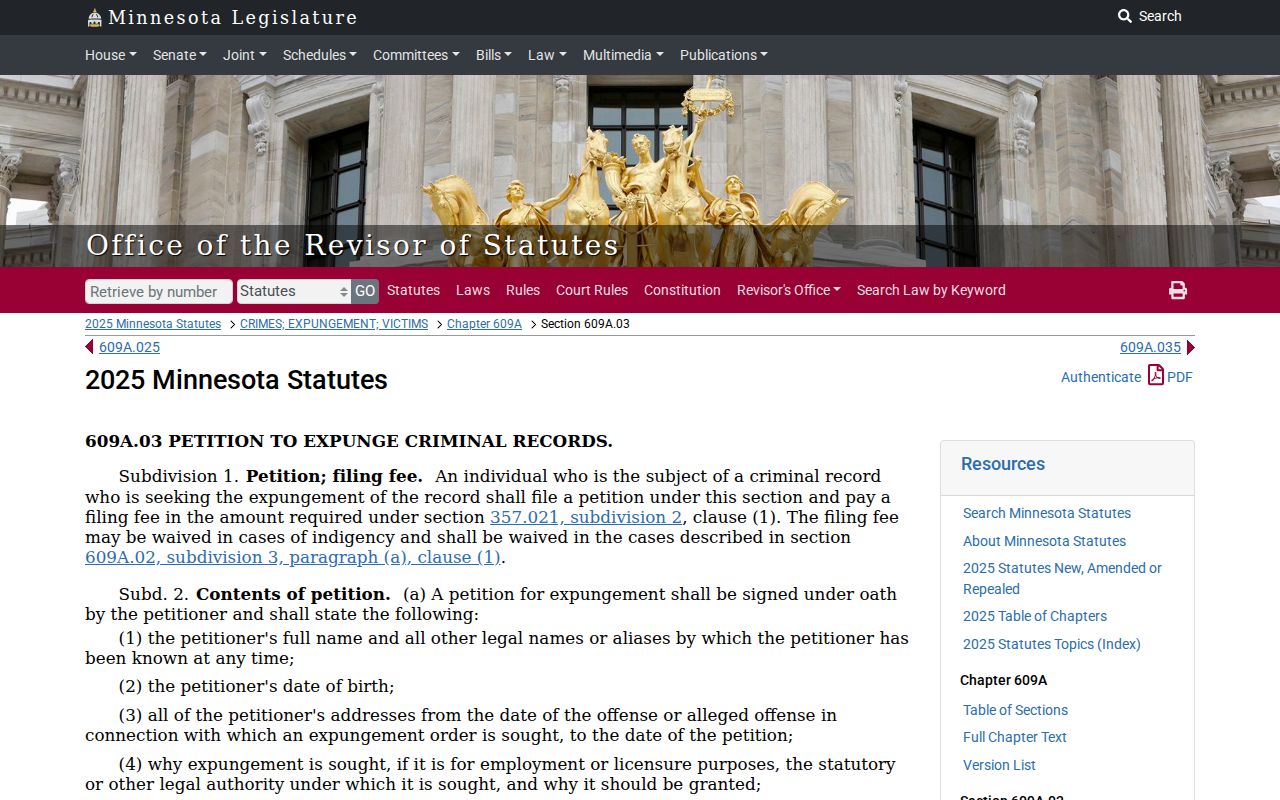
A public lookup result and a formal court process are two different things, and the statute draws that line clearly where record access is concerned. Note: Court administration can explain how to get access or copies. It cannot give legal advice about an individual criminal case.