
Getting St. Louis County Court Records
MCRO Case Details or Document Search is the natural first stop for a docket lookup. Pull the case number first. Then note the document title, the event date, and any document index number you see. MCRO lets you download public PDFs. Treat those as unofficial research copies; the portal cannot certify anything. If an attachment is missing, the case is old, or the category is restricted, take the request to court administration or the Sixth District Copy Center instead. Need certification? Go there too.
- Identify the complete court file number, the year if known, and the St. Louis County location.
- Use MCRO to confirm the Register of Actions, document title, and event date.
- Choose the needed channel: a public PDF, a courthouse terminal, a Sixth District electronic copy request, or the local custodian.
- State the exact document, number of copies, and whether plain, certified, or exemplified copies are needed.
- Respond to the Copy Center's payment contact, then keep the delivered copy with the case number and source date.
You can also inspect a file in person. Each courthouse keeps its records where the file normally sits. Access follows the Rules of Public Access. Duluth, Hibbing, and Virginia all offer a public-access records computer at their District Court locations. The electronic copy route works best when you can describe the request precisely. Minnesota runs court records through one Judicial Branch system. No separate county clerk portal replaces it.
St. Louis County Electronic Copy Request
Need copies of a St. Louis County court record? The electronic route runs through the Sixth District Copy Center. It serves St. Louis County along with the other Sixth District counties. The form asks for your name, phone, email, an email confirmation, address, city, state, and ZIP code. There is also a message box. Use it well.
Put the court file number or the case year in that message. Say which documents you want. Note how many copies. State whether you need certification, and flag any expedited request. Staff will then call you for payment, and nothing ships until they have it. The Copy Center phone is (218) 595-5001, option 3, and they take Visa and Mastercard.
One caution about older links. The old paper-form URL shows up in field inventories. It returns a 404. So use the current electronic form or call courthouse administration instead. And do not guess at a case from a party name alone. List former names only when they truly help locate the case file.
The official Sixth District copy-request page lays out the request channel. Its terms come straight from the courts.
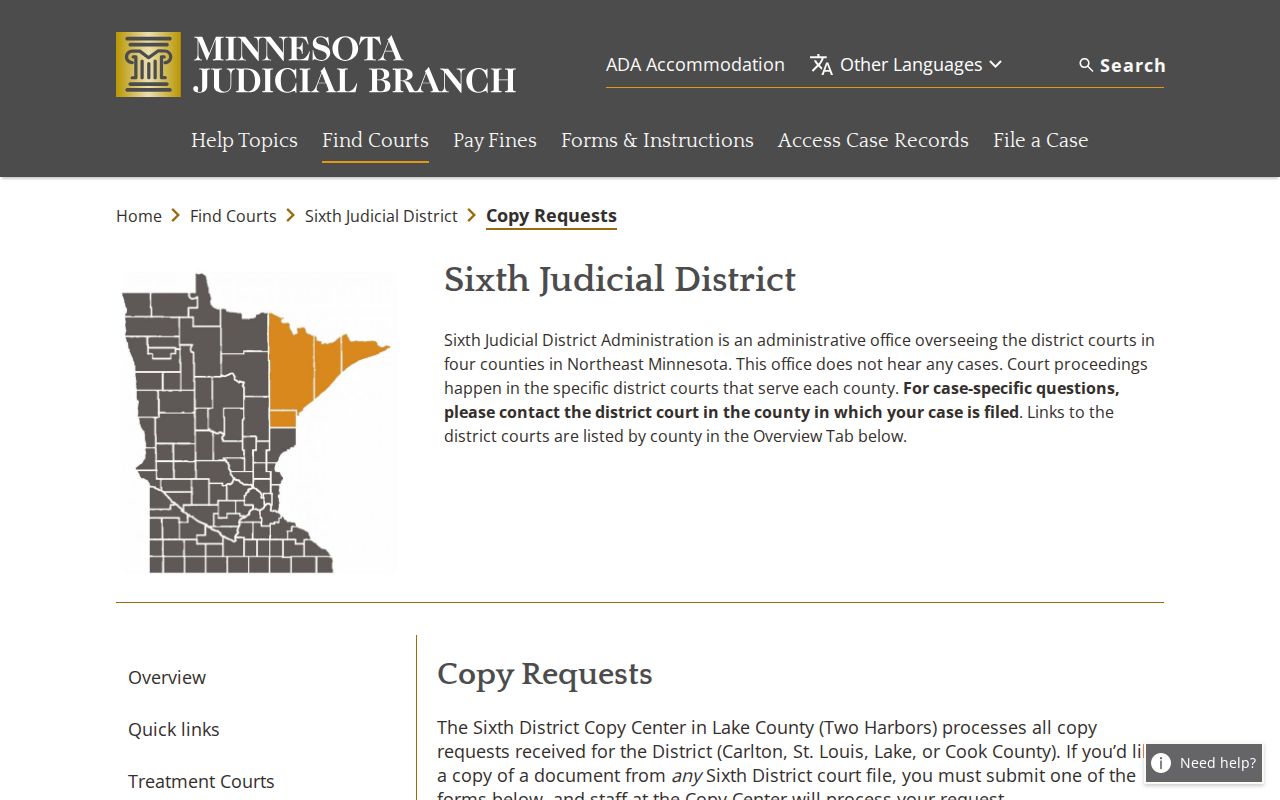
Remember what the form is for. It requests copies; it does not search dockets for you, so a usable case number remains the key field on the request.
Court Record Types
A St. Louis County court record has layers. The Register of Actions is the spine. It indexes the title of the action, origination, activities, proceedings, and filings. Underneath it sits the filed record, the actual paper or electronic item. A calendar row is the narrowest of all. It only shows a scheduled setting rather than the full history or proof of what happened at the hearing.
- Complaint, petition, answer, motion, affidavit, exhibit, and notice.
- Register entries, hearing settings, filings, and available document indexes.
- Orders, judgments, sentencing documents, and satisfactions.
- Public financial entries, including fees, payments, credits, or docketed judgment details where shown.
- Transcripts, which are requested from the court reporter rather than treated as a docket printout.
Category and document date drive remote access. Criminal and major or minor civil documents dated after July 1, 2015 are broadly available in MCRO. Family, paternity, juvenile, and civil-commitment files, along with domestic-abuse, harassment, and related cases, face narrower remote access or extra exclusions.
St. Louis County Record Custodians
Minnesota does not have an elected St. Louis County clerk running a county docket database. Court records follow a statewide District Court administration model instead. The Minnesota Judicial Branch and local court administration maintain the District Court Register of Actions in MNCIS. MCRO is the public window. Copy requests go through the Sixth District Copy Center. They also go through one of three local court-administration offices. Duluth holds its records at the Duluth courthouse, Hibbing at Hibbing, and Virginia at Virginia. The Copy Center covers the whole county. City clerks, police departments, and city attorneys may keep municipal material. None of them is the state court-record custodian for a District Court case.
Duluth District Court
100 N. Fifth Avenue W.
Duluth, MN 55802
(218) 221-7560
Inside a St. Louis County Court Record
A case file in St. Louis County can pair a public Register of Actions with underlying documents. MCRO shows public events, hearings, filings, orders, financial information, and any documents that meet the remote-access rules. An index line alone does not promise a public attachment. Read the record's status against its event sequence. Don't treat any single entry as the whole story of the case.
| Case number | The complete state identifier used for search, copy requests, and confirmation. |
|---|---|
| Parties and roles | Public captions, participants, and attorney details where the rule permits display. |
| Register of Actions | Chronological filing, proceeding, hearing, order, and disposition entries. |
| Documents | Public pleadings, orders, and other available PDFs or index entries. |
| Financial and judgment data | Displayed fines, fees, payments, credits, judgments, or satisfactions where applicable. |
St. Louis County Register and Documents
Read the Register of Actions before ordering anything. It tells an initiating filing from a later order. It separates a hearing date from a hearing result. It also tells a judgment from a satisfaction. A public PDF works for casual research. An agency that demands certification needs the court's certification process. When you make the request, name the document itself rather than just asking for "the file." The Minnesota Judicial Branch MCRO information page explains the current interface. Matching a document title and event date to the Register makes any request far more workable.
Fees and Certified Copies
A plain copy is not a certified copy. Certification means the court custodian verifies the document, and an exemplified copy adds a still higher form of authentication. MCRO downloads cannot be certified through the remote portal. Ask the receiving agency which copy type it requires before ordering, since the process and the fee differ.
| Item | Fee | Notes |
|---|---|---|
| Plain or uncertified copy and printout | $0 | Current fee schedule amount. |
| Certified copy or certified imaged/e-filed printout | $14 per document | Order from court administration or the copy process. |
| Certified plus exemplified copy | $28 | Use when the receiving agency requires this higher authentication. |
| Exemplified uncertified copy | $14 | Separate category on the current schedule. |
| Certified judgment search | $5 per name | Not the same as a copy of a specific case document. |
Check the live schedule before you pay anything. The St. Louis County District Court fee page posts the current fees.
St. Louis County Copy Fees
Copy work in St. Louis County has set prices. Generated reports run $5 for 1 to 50 pages. Past that, each 50-page increment costs $25. Need something scanned or faxed? That service costs $25 per 50 pages or part of a batch. A transcript of judgment is $40. Keep in mind these are fees for copies and records work. They are not for any legal reading of the file.
Fee schedules can change. Confirm the amounts close to when you plan to request records from the court. If you pay by check, make it payable to the District Court Administrator. Current figures sit on the Minnesota Judicial Branch fee page. That page lists the full district court fee schedule.
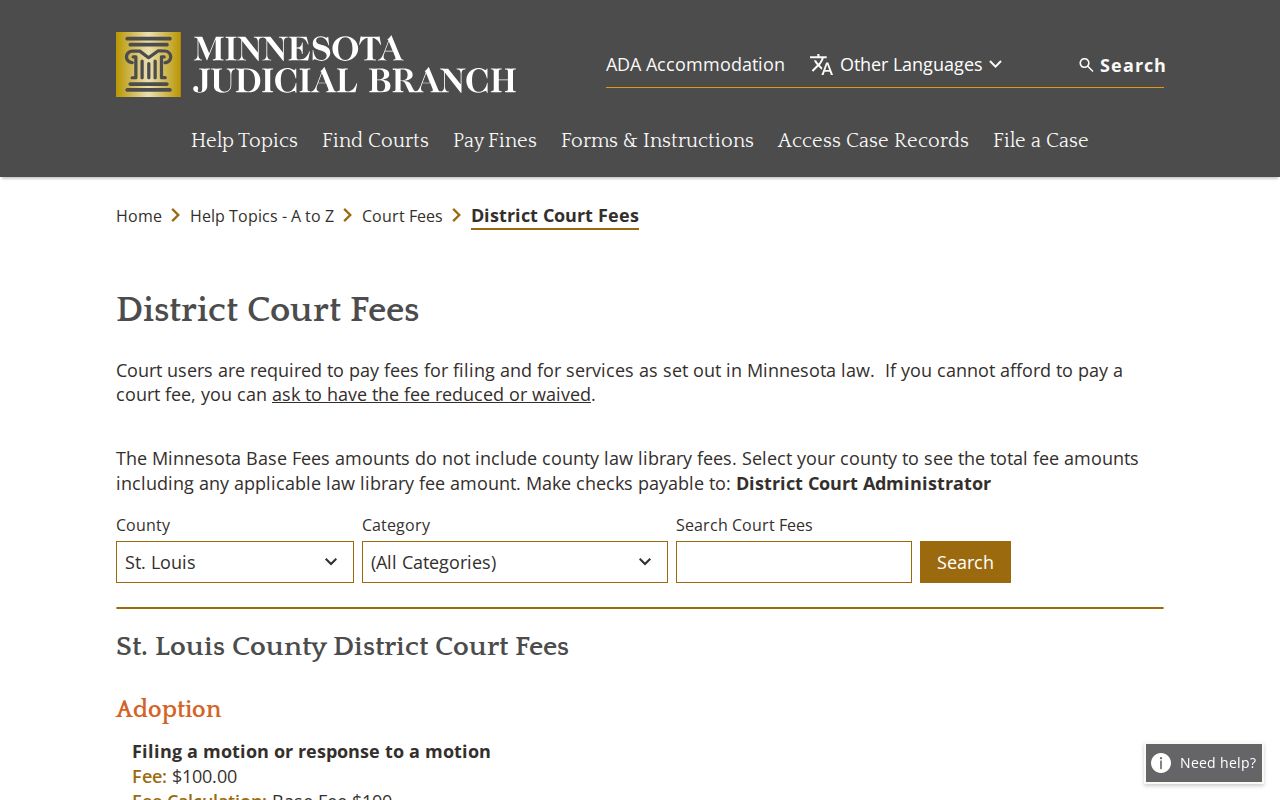
The custodian confirms the precise copy, record, and payment details.
Sealed Records and Public Access
Rule 8.1 gives the public a right to inspect court records where they are normally kept, during regular hours, subject to restrictions. Rule 8.2 covers remote access and shields personal identifiers, restricted categories, sealed materials, and other nonpublic information from online view. So a record missing from a remote St. Louis County docket search can reflect a lawful limit rather than a lost file.
Key Rules: Rule 7 allows an oral or written public-record request that reasonably identifies the record and does not require disclosure of purpose. Rule 8 controls access to court records and remote availability. Rule 9 provides a written appeal route from a non-judge custodian's denial to the State Court Administrator.
St. Louis County Rule 7 Requests
A Rule 7 request can be oral or written. Writing it down is smarter. A written request gives the requester and the custodian the same clear description of what is sought, which speeds up any St. Louis County docket search.
Describe the record reasonably. Include the case number, the St. Louis County location, the file year, party names or former names when useful, the document name, and whether you want inspection or a copy. You do not have to explain your purpose for asking.
The rule does not unlock restricted records. What it does is give you a structured way to ask the right court administration office for a public court record, with a written response if you want one. When you only need to read a file, ask for inspection first and skip certification.
St. Louis County Record Denials
Denials have a process too. If a non-judge custodian turns you away, ask for the explanation in writing. Keep your request description. Rule 9 then lets you appeal to the State Court Administrator in writing. The rule calls for a prompt written decision. You can pursue other relief without waiting. Remember that this is an access procedure, not an order to hand over a protected file.
Sealed, expunged, juvenile, family, commitment, domestic-abuse, harassment, and protected-identifier matters all turn on the court's own legal access ruling. A city office never overrides the controlling court record. Neither does an unofficial copy or a remote search result.
St. Louis County Transcript Requests
A transcript is its own animal. The court reporter prepares it word for word, and it is not a calendar PDF or a Register of Actions copy. The Sixth District wants a written request to the reporter listing the file number, hearing date, and the transcript needed. You pay the reporter directly, in advance. Delivery is electronic, not paper.
The published rates are $4.25 per page for criminal and juvenile proceedings, and $5.75 per page for civil, family, probate, child protection, SPP, and SDP matters. A person proceeding in forma pauperis pays $4.25 per page. Expedited pricing is negotiable. One shortcut exists: if a transcript was already filed in MNCIS, MCRO or the ordinary copy process may cover it. Otherwise reach the reporter through the courthouse.
St. Louis County MCRO Downloads
MCRO downloads make handy unofficial research copies. They are not certified documents. A St. Louis County court record search can start with MCRO when a public remote file is all you need. For a court-certified document, route the request to court administration or the Copy Center. Include the complete file information.
Federal cases live outside MCRO entirely. The U.S. District Court's Duluth Division and PACER run their own custodians, docket system, and pricing. For that separate side of things, the official Duluth Division page describes the federal courthouse and its records.
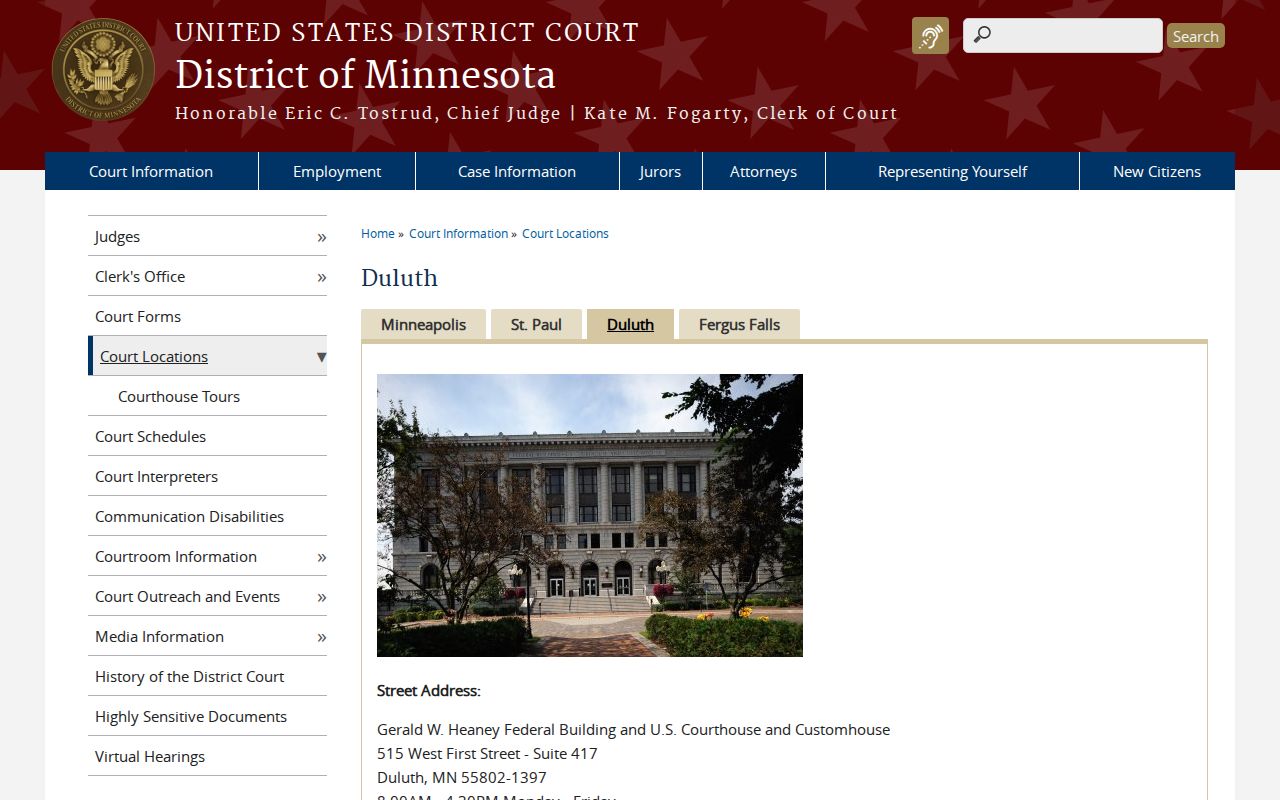
A federal case belongs to its own court system. Fold it into a Minnesota District (Trial) Court request and it will go nowhere.
For federal fee questions, the PACER pricing information from the federal courts explains how those charges work.
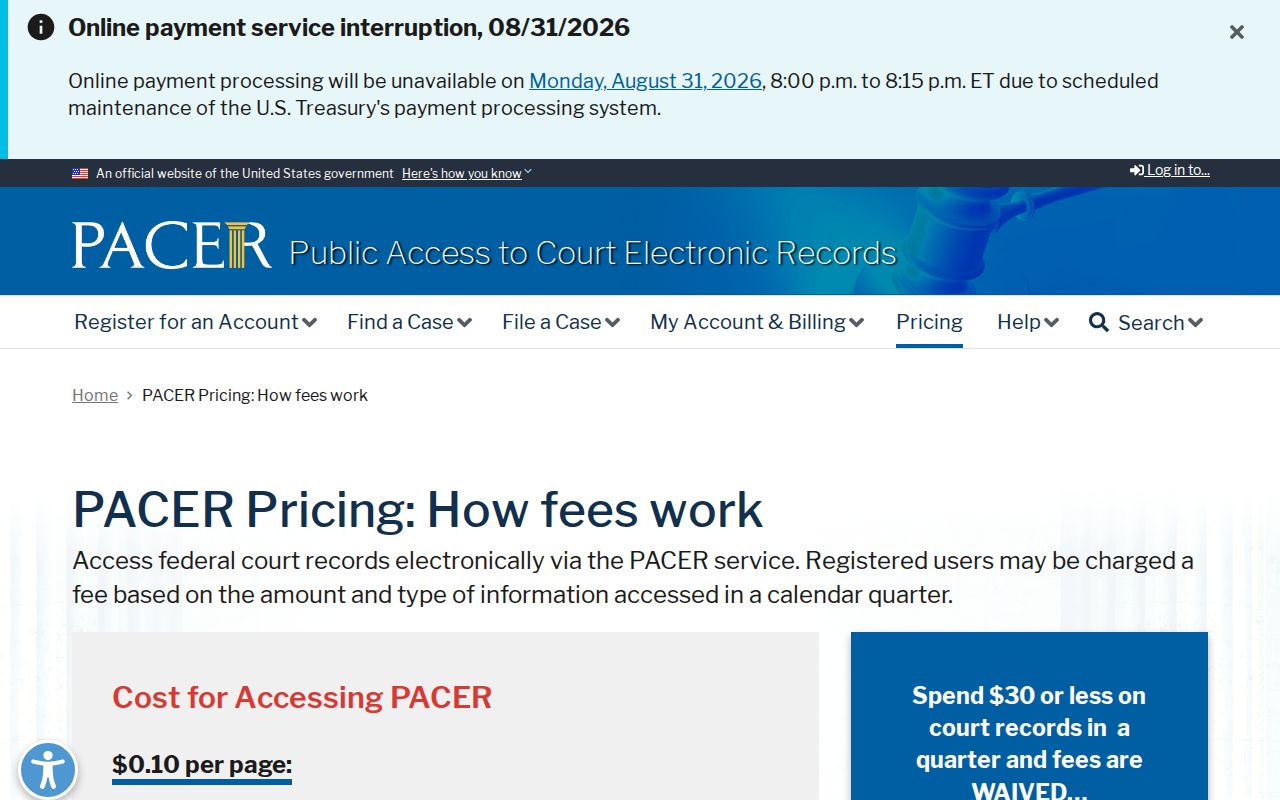
PACER pricing applies only to federal research. It never changes Minnesota state court copy fees.