
Searching St. Louis County Civil Dockets
For remote searching, Minnesota offers Minnesota Court Records Online, or MCRO. It covers qualifying St. Louis County civil records. Case Search works through separate tabs. You can look by name, complete case number, citation number, or attorney. A complete case number beats them all for precision. A name search can be narrowed by the St. Louis County location, filing date, case category, and case status. Narrow first, then open Case Details. Before trusting a match, compare the parties' roles. Check the civil category, the location, and the filing date too. The Register of Actions beneath it is the real court record, not a search-result card. One entry may lead to a document index. Another may lead to a hearing event, an order, or a judgment. What if the online record is missing, outdated, protected, or needed in certified form? Then court administration is the right route. Guessing from a short result is not.
- Accept the MCRO terms and select Case Search.
- Use a complete Minnesota case number when it appears on a notice, order, or other court paper.
- For a name search, add known details and narrow the court location to St. Louis County.
- Confirm the parties’ roles, case category, date, and facility in Case Details.
- Use a courthouse terminal, court administration, or the Sixth District Copy Center for records outside remote access.
St. Louis County Civil Court Divisions
St. Louis County sits in Minnesota's Sixth Judicial District. That District Court handles both major and minor civil cases. Conciliation Court, the state's small-claims division, operates inside District Court rather than as a separate county court. Family and probate matters reach District Court too. So do guardianship, trust, mental-health, and juvenile cases. Their rules for public remote access differ from the rules for ordinary civil dockets.
| Civil matter | St. Louis County court route | Public-record starting point |
|---|---|---|
| Major or minor civil | Minnesota District Court | MCRO Case or Document Search, then court administration for copies. |
| Conciliation or small claims | Conciliation division of District Court | MCRO and the local court-administration office. |
| Family or paternity | District Court with narrower remote documents | Public register and court-generated records where available. |
| Probate or guardianship | District Court probate-related work | MCRO for qualifying records, with limits for protected documents. |
A reference image from Minnesota’s juvenile-records statute appears below.
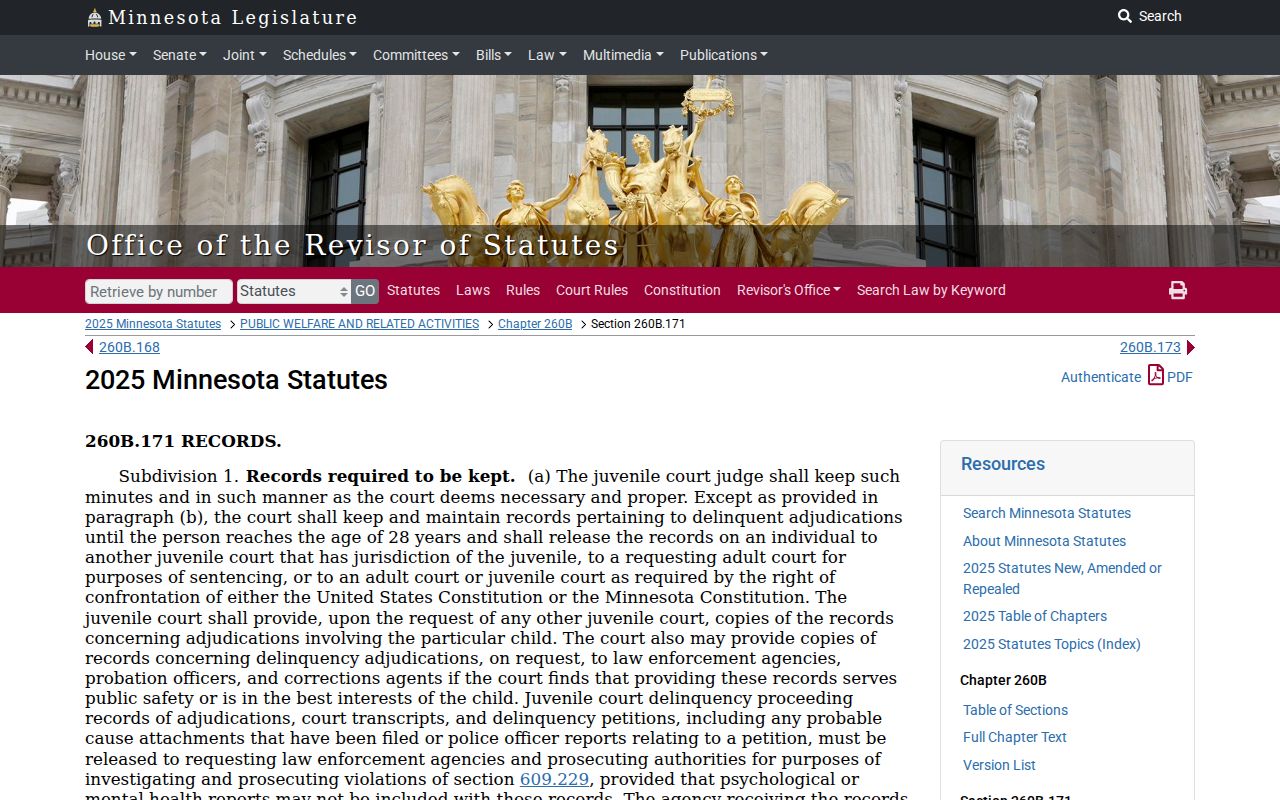
Why would one District Court category follow a different access rule than an ordinary St. Louis County civil docket? The statute shows exactly how that happens.
Inside a St. Louis County Civil Docket
Case Details can show a lot. The case number, filing date, court location, caption, and party roles all appear, along with public attorney information, the case category, and status. The dated Register of Actions sits beneath that header. Motion and hearing entries, a document index, orders, judgments, satisfactions, and public documents can show up there too. A civil docket can carry a long event history. That holds even when only a portion of the filed documents opens for remote view. So read the displayed event itself. A status is a system field. An order, a dismissal, a judgment, or a satisfaction is a particular court event. A money judgment and a satisfaction are different things. The first reports a court decision entered on the docket, while the second may record a later fulfillment. Where a legal effect matters, the underlying official record beats a label alone.
| Case identifiers | Case number, filing date, location, category, and status identify the St. Louis County civil record. |
|---|---|
| Caption and roles | Shows parties as plaintiff or petitioner and defendant or respondent, with public attorney details where available. |
| Register entries | Chronological entries for a complaint, answer, motion, hearing, order, judgment, or dismissal. |
| Document index | Lists filings and court documents, though an index entry may not carry a public attachment. |
| Judgment details | Can include a docketed money judgment or satisfaction where the public case record supplies it. |
Note: a civil status label does not explain the legal effect of each event entered in the Register of Actions. Read the event, not just the field.
St. Louis County Civil Register Events
A civil docket reads best as a chain of events. A complaint or petition starts the case. An answer responds. Motions ask the court for a procedural step, while hearings and notices set matters for court. Orders give directions or rulings. A judgment formally resolves all or part of an action, a satisfaction can later record that a docketed money judgment was satisfied, and the record may even show an appeal-related entry.
- Complaint or petition
- The filing that begins a civil matter, depending on the type of proceeding.
- Answer
- A formal response to a civil claim.
- Motion
- A request for an order or procedural action by the judge.
- Judgment
- A formal court decision that may resolve the action or establish an amount owed.
- Satisfaction
- A separate entry showing that a docketed money judgment was satisfied, as the court record states.
A reference image from the Minnesota Government Data Practices Act page is included here.
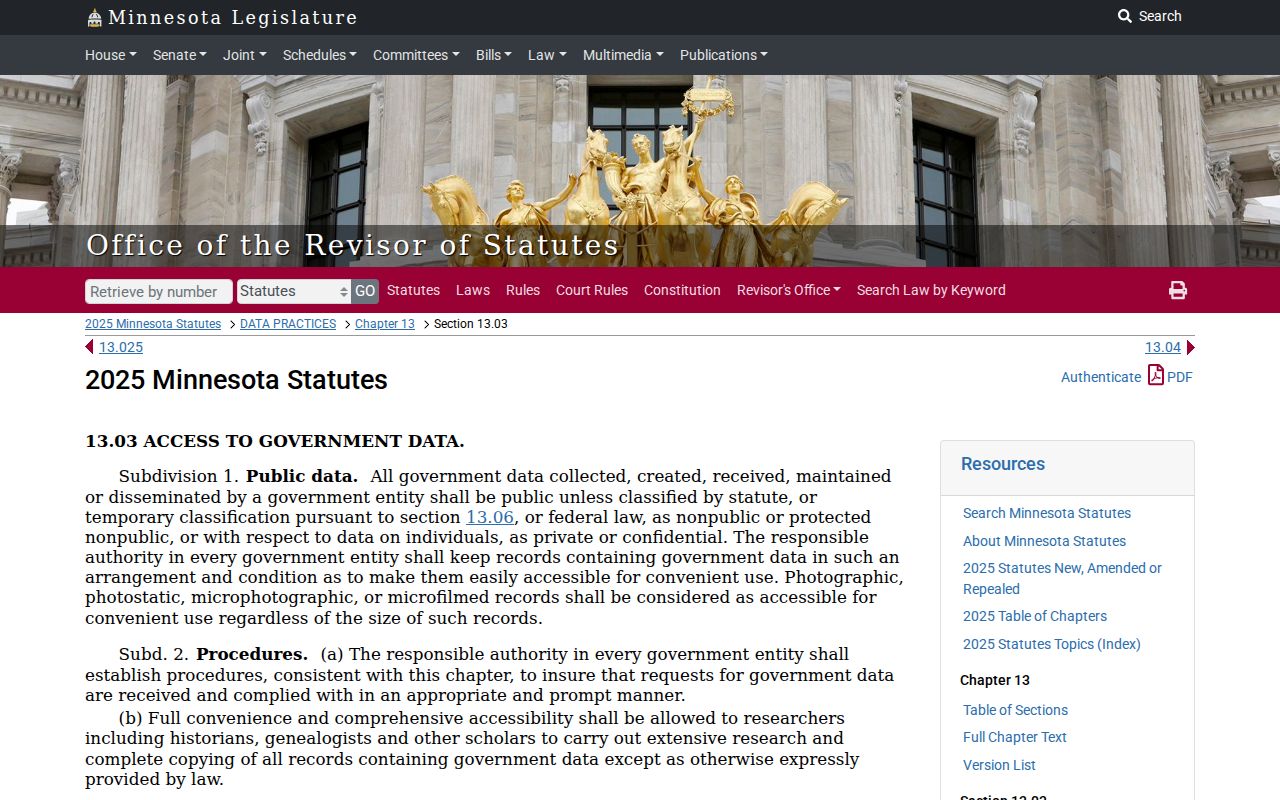
Which rules govern access to judicial records here? The specific Minnesota Rules of Public Access control the court's process, and the statute adds useful public-data context.
Civil Case Types on the Docket
The civil Register of Actions covers many case types. Major and minor civil cases appear there. So do conciliation, family, and probate matters. Ordinary civil records often include public documents filed after July 1, 2015 in qualifying categories. Family and paternity records have a narrower remote-document footprint. Court-generated orders, the register, and certain notices can be accessible, while party-submitted affidavits, financial material, and other supporting filings stay off remote view. Probate, guardianship, conservatorship, and trust cases can hold qualifying public documents in MCRO. Even so, one document may be confidential or sealed. Mental-health commitment records face special limits, and juvenile, domestic-abuse, harassment, and child-protection categories carry separate restrictions. The shorthand: availability turns on case type, record, date, and public-access rule.
St. Louis County Civil Document Limits
A document index is not a promise of a downloadable file. MCRO may show a filing's title and event date without opening a public PDF. Why? The document could be older. It might be restricted by its category, subject to an access rule, or otherwise unavailable for remote distribution. Even so, the Register of Actions confirms that the filing or order exists. It just won't reveal every page.
Minnesota's district trial-court filing information keeps the public record separate from filing work. eFS, short for Minnesota eFile and eServe, is a filer-facing system. It covers accounts, filing codes, document uploads, service lists, confidentiality designations, and required payments. It is not a public civil docket search.
For the filer's side, see the Minnesota eFile and eServe page. It shows how a filing reaches the court.
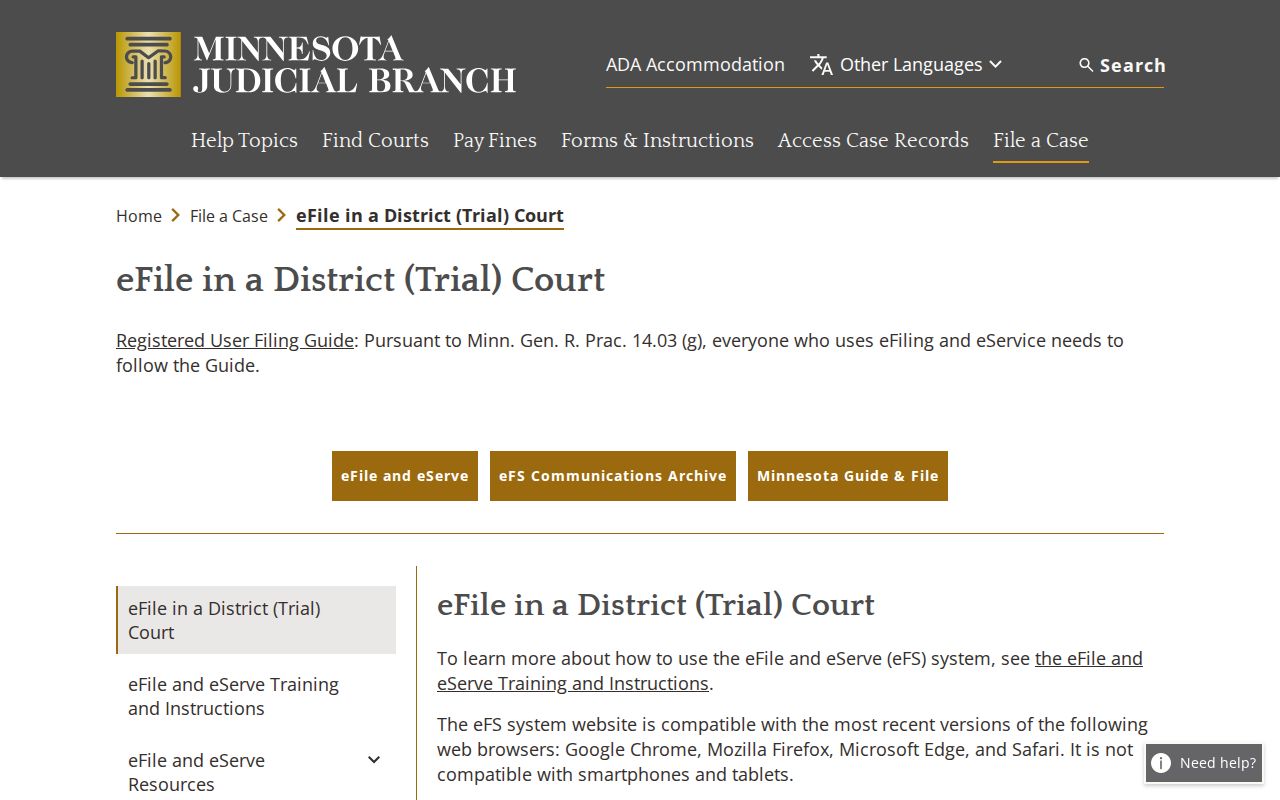
How does a filing reach the court? eFS handles that trip, while MCRO stays the separate public interface for qualifying St. Louis County civil docket information.
Civil Docket Settings and Hearings
A hearing entry on a civil docket usually lists the date, time, courtroom, judicial officer, hearing type, and connection details. The Sixth District calendar inventory covers motion hearings, evidentiary hearings, scheduling conferences, court trials, case-management conferences, and order-to-show-cause hearings. A setting is only a scheduled event. It does not prove the hearing happened. Nor does it show that a party won or that the case ended.
Check the current court calendar and the latest order or notice before relying on a future setting. MCRO also has a Hearing Search tool, separate from Case Search. It accepts a name, case number, judicial officer, attorney, or bar number. For planning, the calendar fits the job. Case Details is the better view of the wider Register of Actions for any St. Louis County case.
St. Louis County Civil Court Counters
St. Louis County runs three full-service court administration counters: Duluth, Hibbing, and Virginia. Each has public-access records computers. Those terminals count for a lot here, since remote access is limited on purpose. Rule 8.1 governs the arrangement. Public court records may be inspected or copied at the custodian where they are normally kept, during regular hours, subject to the rule. Come prepared. Bring the case number if you have one. Add an approximate year, party names, the facility, and a focused description of the document or event sought.
The addresses are straightforward. Duluth District Court sits at 100 N. Fifth Avenue W., Duluth, MN 55802. Its published main phone is (218) 221-7560. Hibbing District Court is at 1810 E. 12th Avenue, Hibbing, MN 55746, phone (218) 274-6007. Virginia District Court sits at 300 South Fifth Avenue, Virginia, MN 55792, phone (218) 305-7021. All three post Monday through Friday hours of 8:00 a.m. to 4:30 p.m. Call ahead to confirm operations before you drive out.
For a look at how the court handles filings, see the District Trial Court filing page. It lays out the official process.
That official filing route also confirms the setup: the three St. Louis County locations are full-service District Court administration offices rather than separate civil courts. Note: Court staff can explain records, copying, scheduling, and filing logistics, but they cannot interpret a civil docket for a party.
Civil Docket Access Rules
Rule 7 lets anyone make an oral or written request that reasonably identifies the court record. No statement of purpose is required. Rule 8 governs inspection, copying, remote access, protected identifiers, and restricted categories. Start with MCRO for material available remotely. Then use a courthouse public terminal or court administration when a record needs an in-person access decision. The Sixth District Copy Center handles county-wide copy requests. It serves St. Louis County and the other Sixth District counties.
If access is delayed or denied, ask court administration which rule applies and why. Getting the explanation in writing often helps. Rule 9 offers a written appeal to the State Court Administrator. That route applies when a non-judge custodian denies access. It cannot unseal protected material. It simply gives a defined way to seek review of an access decision.
Certified-copy boundary: A free MCRO view is unofficial. A certified civil document must come from court administration or the Sixth District copy process, not from a downloaded remote record.
St. Louis County Civil Copy Routes
An electronic request route runs through the Sixth District Copy Center. The form asks for a name, phone, email, mailing address, and a description identifying the court file number or year, the documents wanted, the number of copies, any certification, and expedited need. Staff will call for payment. Copies are not sent until payment arrives. The Copy Center phone is (218) 595-5001, option 3.
For civil records, say whether you need plain, certified, or exemplified copies. The current St. Louis fee schedule lists plain copies, printouts, scans, and screen prints at $0; certified copies at $14 per document; certified-plus-exemplified copies at $28; and a certified judgment search at $5 per name. Fees can change, so check the live schedule before paying.
For filing-system help, the eFS Support Center is the official resource.
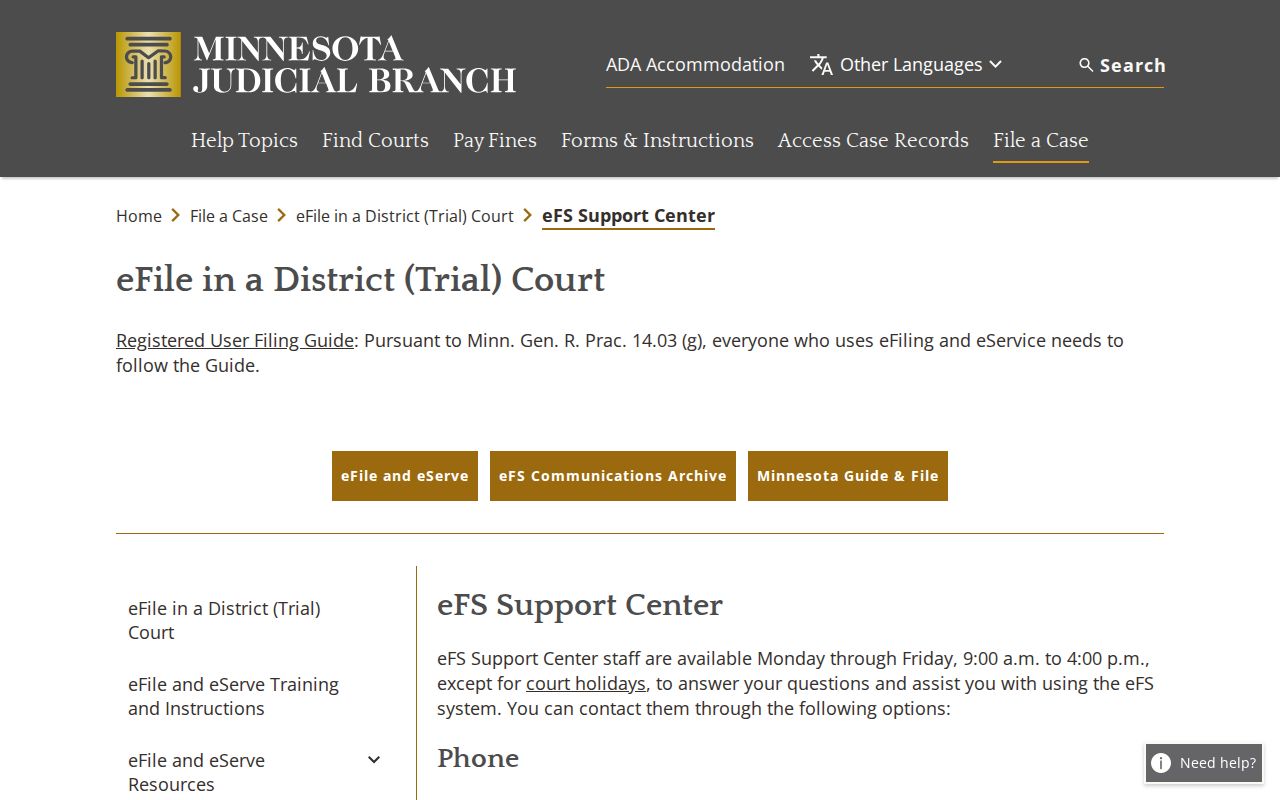
The eFS support source helps with filing-system questions. Copy Center staff and local court administration handle public copies of civil court records.
St. Louis County Civil Results Need Context
A public civil docket helps you locate a case's events and documents. It will not tell you what a motion means. It will not settle a dispute or substitute for the wording of an order. Treat incomplete signals with care. A common party name, a short status field, or a missing remote attachment can all mislead. Keep the case number, facility, date, and record source handy while you review a St. Louis County civil matter.
Know the case number but not the search route? St. Louis County Case Lookup lays out the broader MCRO context. For a specific civil filing, the court custodian remains the authoritative source for a certified judgment too.