
Searching the St. Louis County Court Docket
Any St. Louis County court docket search starts with Minnesota Court Records Online, or MCRO. It is one statewide service, not a county-run database. Accept the terms, then pick the right search mode. Name, case number, citation number, and attorney searches each do a different job. A full case number works best for a St. Louis County lookup. It pulls one file, not everyone who shares a name.
Gather a few details first. Bring the case or citation number, the party names as written on a notice, and a rough filing date. Add the court location if you know it. A St. Louis County case may sit in Duluth, Hibbing, or Virginia. Check the party role, category, location, and date before opening Case Details. Remember that a public entry is procedural. It shows what was filed, not who did what. It cannot settle questions of identity or current status.
- Open MCRO and accept the access terms.
- Use Case Number or Citation Number when a notice supplies one.
- For a name search, add first name, dates, category, and St. Louis County location where available.
- Confirm the party role and facility in Case Details before reading events.
- Use the courthouse or Copy Center when a record is unavailable remotely or a certified copy is needed.
St. Louis County MCRO Tools
MCRO splits its tools into Case Search, Document Search, Hearing Search, and Judgment Search. Case Search locates qualifying case records. Document Search starts from a case number and opens the public document index. Hearing Search covers scheduled settings. Judgment Search sticks to docketed money judgments and satisfactions. The tools overlap, but each has its own job. A calendar row is only a schedule. A document index line does not promise that a public attachment exists.
The official MCRO information page explains the limits. What you can see depends on case category, filing date, confidentiality rules, and search method. The service took over from MPA Remote in 2023. Think of the system in layers. MCRO is the public window. MNCIS is the case-management record behind it. Minnesota eFile and eServe is where parties and authorized filers submit paperwork.
| MCRO route | Best use | Important limit |
|---|---|---|
| Case Search | Case, name, citation, or attorney research | Pending criminal name results are limited |
| Document Search | Available public filings by case number | An index may have no public PDF |
| Hearing Search | Upcoming settings | A setting can change after it is posted |
| Judgment Search | Docketed money judgments and satisfactions | It is not a complete case history |
Inside a St. Louis County Court Docket
Minnesota calls its docket the Register of Actions. Under Rule 8, it lists the case title. It also lists the case's origination, activities, proceedings, and filings. MCRO shows much of that under Case Details, in chronological order. An entry might be a complaint or petition. It might also be a notice, a motion, a hearing, an order, a judgment, or a payment. Read each event label with its date. One line rarely tells you the legal effect of the whole case.
In a St. Louis County court docket, the location field carries real weight. It separates a Duluth file from a Hibbing or Virginia one. That makes a later copy request more precise. Sections for financial information, bond or bail activity, and available documents appear only when the public record allows. Protected identifiers and restricted material stay off remote access by design.
| Case Number | The complete state identifier, used for the strongest exact lookup. |
|---|---|
| Parties | Public party roles and counsel information where available. |
| Register Events | Filed documents, proceedings, and court actions in date order. |
| Hearing Settings | Date, time, location, officer, hearing type, and connection details. |
| Documents | Available public attachments or an index entry without an attachment. |
| Disposition | The actual later event, order, plea, verdict, dismissal, or judgment shown. |
St. Louis County Register Terms
Many familiar court words label a step, not a result. A setting is a scheduled event. A continuance means the court moved it or delayed it. A disposition is the later action that resolves all or part of a case. Follow the chain of events. When the stakes demand it, read the filed order itself. Do not lean on a status filter.
- Register of Actions
- The chronological court record of activities, proceedings, and filings.
- Setting
- A scheduled hearing, not proof the hearing occurred or reached a result.
- Disposition
- The action shown when a charge or case is resolved, as the record states.
- Satisfaction
- An entry that a docketed money judgment was satisfied, distinct from the judgment itself.
Note: The calendar and the Register of Actions can describe the same case at different levels of detail. Use each for its stated purpose.
Courts That Keep Dockets in St. Louis County
One trial court serves St. Louis County. It belongs to Minnesota's Sixth Judicial District. The Minnesota District Court keeps the public Register of Actions here. That docket covers state criminal cases, traffic matters, civil suits, conciliation court, family, probate, mental-health, and juvenile files. Each category follows its own access rules. Duluth, Hibbing, and Virginia each house court administration. They work as three service points rather than as three separate court systems.
Prosecution splits by level. City attorneys handle local misdemeanors, petty misdemeanors, and ordinance violations. The St. Louis County Attorney handles felonies and the rest of the county's prosecution work. Wherever a charge starts, the state trial court still keeps the case docket. Federal cases sit elsewhere entirely. The U.S. District Court's Duluth Division runs on PACER and CM/ECF, not MCRO.
| Court | Docket Covers | Where to Search |
|---|---|---|
| Minnesota District Court | State criminal, traffic, civil, family, probate, and conciliation matters | MCRO, court administration, or public terminal |
| Sixth District Copy Center | County-wide document-copy requests | Electronic request or Copy Center contact |
| U.S. District Court, Duluth | Federal civil and criminal matters | PACER and CM/ECF, not MCRO |
Three St. Louis County Court Facilities
Here is the access fact that matters most. St. Louis County spreads its court services across three buildings. Duluth, Hibbing, and Virginia each have a court administration counter. Each also has a public computer for court records. The state directory lists all three as Duluth, Hibbing, and Virginia full-service locations. Remote searches can fall short, though. Sometimes the answer is the right public terminal. That is true for an older file, a record held back from online view, or a docket that needs lawful inspection.
Keep the location straight on every step of a case lookup. The online record and the court calendar should point to the same facility. So should any copy request. Do this whenever you know it. That one detail helps court administration pull the correct file. It also saves a wasted trip to the wrong counter. Hours and daily calendars shift, so call the published facility contact for a same-day question.
Duluth District Court
100 N. Fifth Avenue W., Duluth, MN 55802
(218) 221-7560
Hibbing District Court
1810 E. 12th Avenue, Hibbing, MN 55746
(218) 274-6007
Virginia District Court
300 South Fifth Avenue, Virginia, MN 55792
(218) 305-7021
The St. Louis County courts and law page provides the county’s official routing overview.
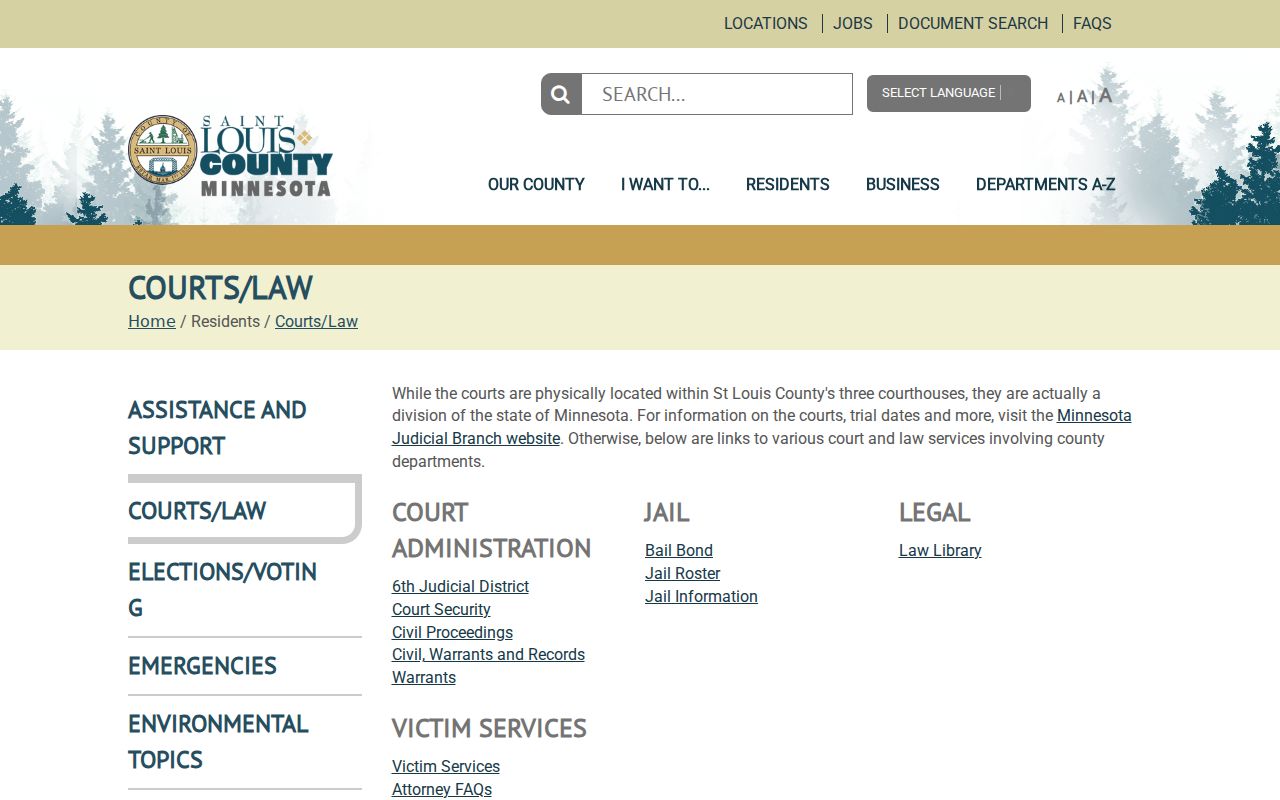
Use it as a cross-check whenever a search result leaves the facility unclear. The Minnesota Judicial Branch St. Louis County page confirms the three-office arrangement.
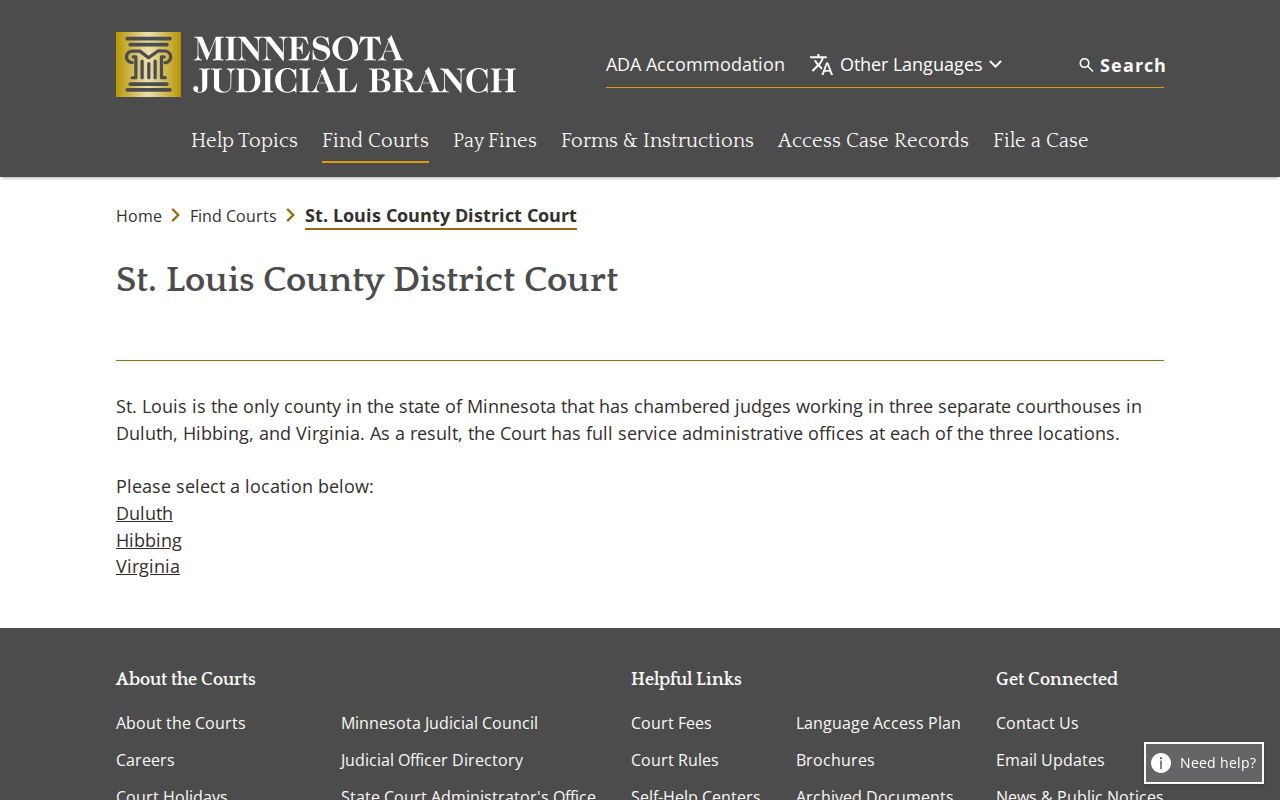
The directory keeps a request headed to District Court administration, not to some unrelated city office.
How to Find Court Dates and Settings
The Sixth District publishes separate weekly calendar links for Duluth, Hibbing, and Virginia. Each row can show the party, hearing location, date, time, judicial officer, hearing type, connection type, and case number. That case number is the bridge. Match the row to the docket in MCRO and the full picture starts to form. Remember what the setting is not. A snapshot of what was scheduled proves neither that the hearing happened nor how the case came out.
Freshness matters here. The Duluth court page posts public calendars around 7:00 a.m. on business days and refreshes them hourly. A printed calendar at the courthouse can run ahead of the online version, though. When a St. Louis County hearing date truly matters, the St. Louis County court dates confirmation sequence covers it. Start with MCRO first. Then check the current calendar, the latest notice or order, and finally court administration.
St. Louis County Calendar Limits
Think of the calendar and the case history as two different tools. The calendar answers one question: what is scheduled next? For filings, the order of hearings, and any recorded result, the Register of Actions in the court docket does the better work. A label like "Remote Hearing" only tells you how the setting was listed. It says nothing about the ruling, who attended, or the final outcome.
Why might a line be missing? The case may be confidential. The matter may not be scheduled, or the entry may have changed after publication. Absence does not mean the case vanished. In an urgent docket search, keep the case number handy. Then ask the right St. Louis County court administration office to confirm the lawful access route.
The Sixth District calendar page is the official starting point. It also hosts the facility-specific PDFs for the St. Louis County court-docket lookup.
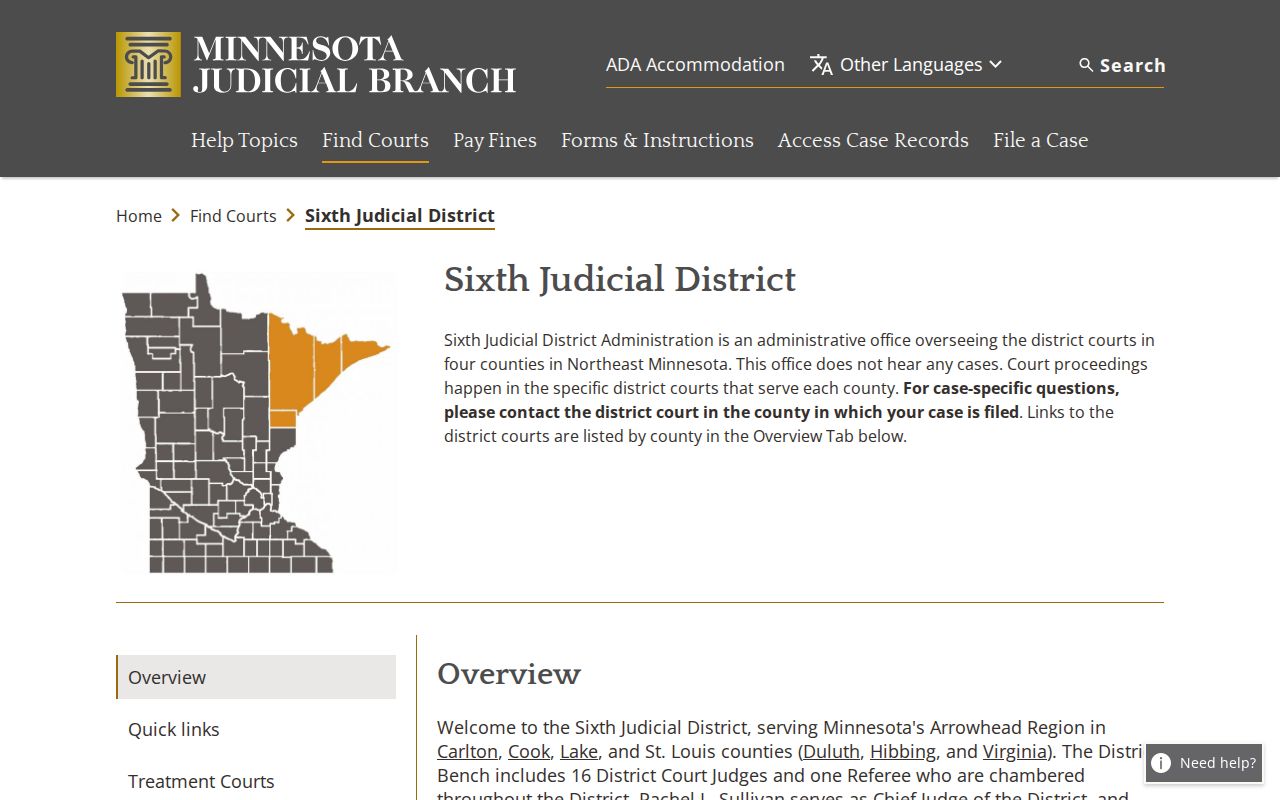
That split between facilities is why both the location and the case number matter when you confirm a hearing date.
Public Access to Court Dockets
Access to the St. Louis County Register of Actions runs through Minnesota's court-record rules, not just a county public-information statute. Rule 8 opens qualifying court records to the public while restricting remote access to protected material. Rule 7 lets anyone make an oral or written request that reasonably identifies the record. Your purpose is your own business; no requester has to state one. Where privacy, security, or practical needs call for it, a copy may stand in for the original.
Public access is not the same as complete remote access. Family, juvenile, commitment, domestic-abuse, harassment, sealed, and expunged records all carry narrower rules, and personal identifiers get stripped from remote records. In practice, start with MCRO for a qualifying record. If the remote result is limited or missing, turn to the public terminal or court administration for the court docket you need.
St. Louis County Access Layers
A blank result in MCRO rarely means nothing exists. Pending criminal matters stay out of defendant-name searches. Older files may need local inspection at the courthouse. A family register can appear while party-submitted documents stay hidden, and juvenile or protected records sit behind their own statutory walls. So an empty name search cannot prove a case does not exist, and a partial result cannot prove every related filing is public.
The smart move is to change the access layer, not to chase an unofficial substitute. Run the full case number. Verify the location, record category, and date. Then take a lawful request to a court-administration office or the Sixth District Copy Center. The Rules of Public Access on the revisor's site set the current authority for those limits on any St. Louis County court docket request.
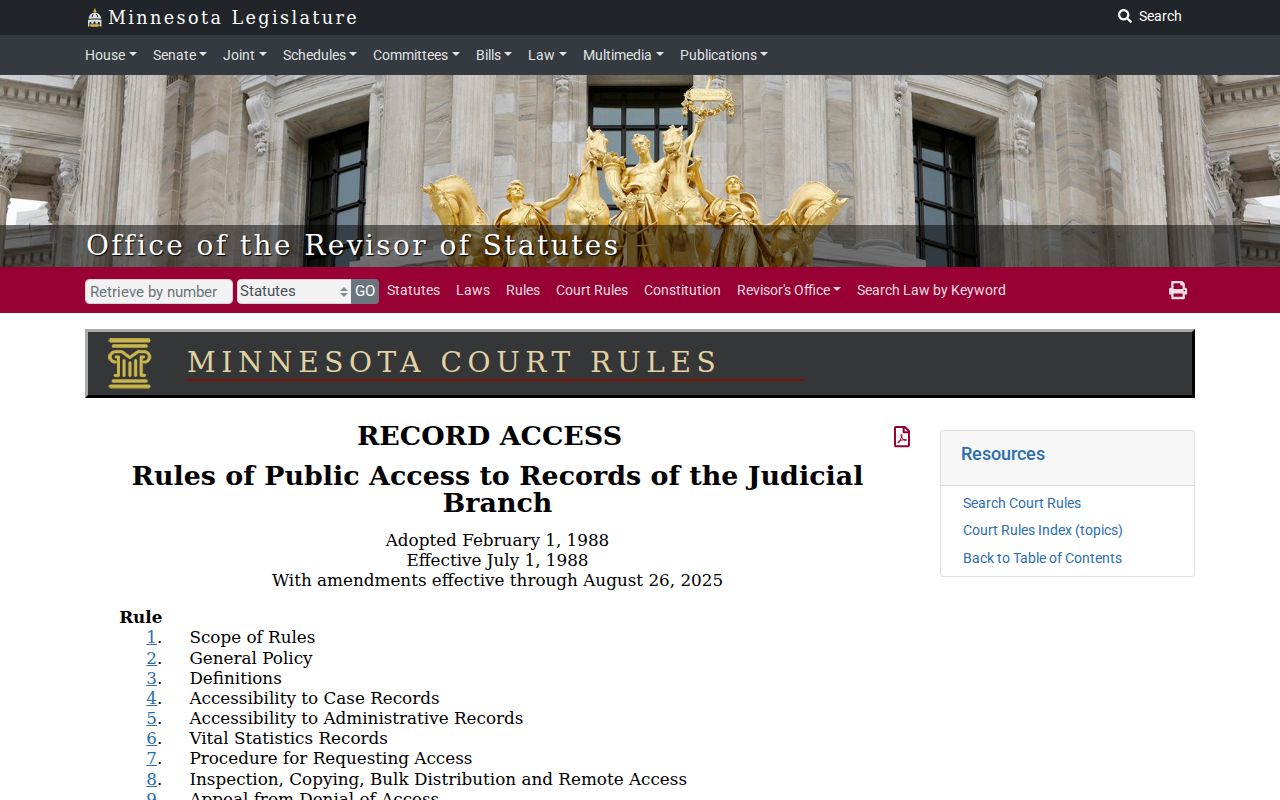
It supports a records search that respects the court’s designed privacy boundaries.
Docket Records at the Clerk's Office
There is no separately elected St. Louis County clerk running a county docket portal. District Court administration maintains the MNCIS Register of Actions instead, with local custodians in the Duluth, Hibbing, and Virginia offices, while the Sixth District Copy Center handles county-wide copy requests. That custody map matters once a record is missing from MCRO or a certified document is required.
To make a request, gather the court file number or year, the document you need, how many copies, and whether plain, certified, or exemplified. Party names or former names can help staff locate the file. The electronic Copy Center route collects contact and mailing details, and then staff reach out for payment. A MCRO download can identify a record. It can never become a certified copy.
Sixth District Copy Center
County-wide copies for St. Louis County and other Sixth District counties
(218) 595-5001, option 3
St. Louis County Copy Choices
Start with the form you actually need. Inspection is one thing, a plain copy another, and certification another still. The St. Louis County fee schedule lists plain copies, printouts, scans, and screen prints at no charge. A certified civil or criminal instrument runs $14 per document, and certified plus exemplified runs $28 per document. Schedules change, so confirm the live one before sending payment.
A transcript is a different animal entirely. It is the verbatim record a court reporter prepares, not a docket printout. Give the reporter the file number, the hearing date, and the transcript you want, then arrange payment directly. Order a certified copy only when the receiving court, agency, or process demands it. The St. Louis County fee page carries the current numbers.
| Record choice | Listed fee | Use |
|---|---|---|
| Plain copy or printout | $0 | Reading a qualifying public record |
| Certified document | $14 per document | Custodian-certified copy |
| Certified plus exemplified | $28 per document | Higher authentication when required |
| Certified judgment search | $5 per name | Official search request |
St. Louis County Docket Technology
St. Louis County cases run through several public tools, each with its own job. MNCIS manages cases inside the court. MCRO is the window the public uses, showing qualifying case records, documents, hearings, and judgments. Want to file instead of search? That is eFS, which handles electronic filing and service rather than docket searching. A weekly calendar lists hearings for the week, and Court WebPay takes payment on eligible citations. For a certified copy, a protected record, or anything unavailable remotely, court administration and the Copy Center are still the answer.
This setup grew in stages. Electronic filing went statewide in Minnesota first, and MCRO replaced MPA Remote in 2023. So the system has more than one door by design. Push a docket search through an e-filing screen, or treat a payment screen as case history, and you will draw the wrong conclusion about a St. Louis County court docket.
The Minnesota Judicial Branch performance resource lays out the wider court-system context behind these local record tools.
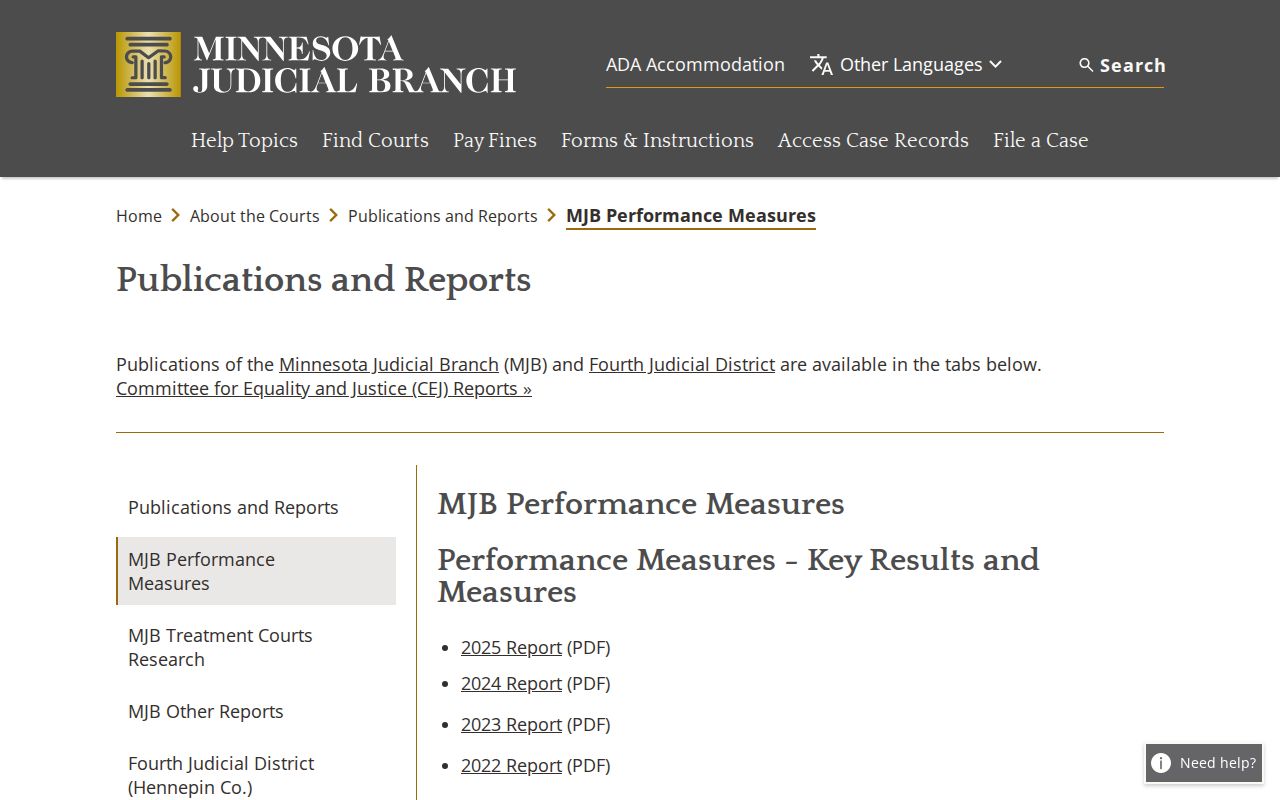
The service layers support access while maintaining the rules that protect restricted court information.
St. Louis County Court Dockets by City
By 2020 Census count, the five largest cities in St. Louis County are Duluth, Hibbing, Hermantown, Virginia, and Chisholm. Treat a city name as a routing clue, not a court label. Duluth, Hibbing, and Virginia each host District Court facilities. Hermantown and Chisholm have no separate state courthouse or public municipal docket portal. Even so, the route is the same. A state citation, a case number, or a records request always points back to Minnesota District Court administration.
City pages help keep state court records apart from municipal business. Take Duluth. A city parking ticket runs through its own municipal payment and appeal route, unless the notice names a District Court case. The same discipline helps here. It stops a certified state-court document request from landing on a city clerk just because the incident happened in that city.
Duluth Docket Search
86,697 in the 2020 Census · District Court facility and separate city parking route.
Hibbing Docket Search
16,214 in the 2020 Census · District Court facility and public records terminal.
Hermantown Docket Search
10,221 in the 2020 Census · state cases route to the applicable District Court facility.
Virginia Docket Search
8,421 in the 2020 Census · District Court facility, public terminal, and North County access.
Chisholm Docket Search
4,775 in the 2020 Census · municipal contacts do not replace the District Court custodian.
St. Louis County State Court Boundaries
More than one court system can share one courthouse landscape. A Minnesota state case filed in St. Louis County lives in the District Court workflow. It also lives in MCRO. A federal case in Duluth belongs to the U.S. District Court. Search it through PACER or CM/ECF instead. A city parking notice belongs with the city that issued it. Trust the paper notice, the complete number, and the named court over a place name.
Federal files are not missing from MCRO. They sit in a different system entirely. A city office can rightly handle a municipal payment. It cannot produce a District Court Register of Actions or a certified copy. Keeping those lines straight preserves what a St. Louis County court docket actually means.
The District of Minnesota CM/ECF court information page shows the separate federal record route in practice.
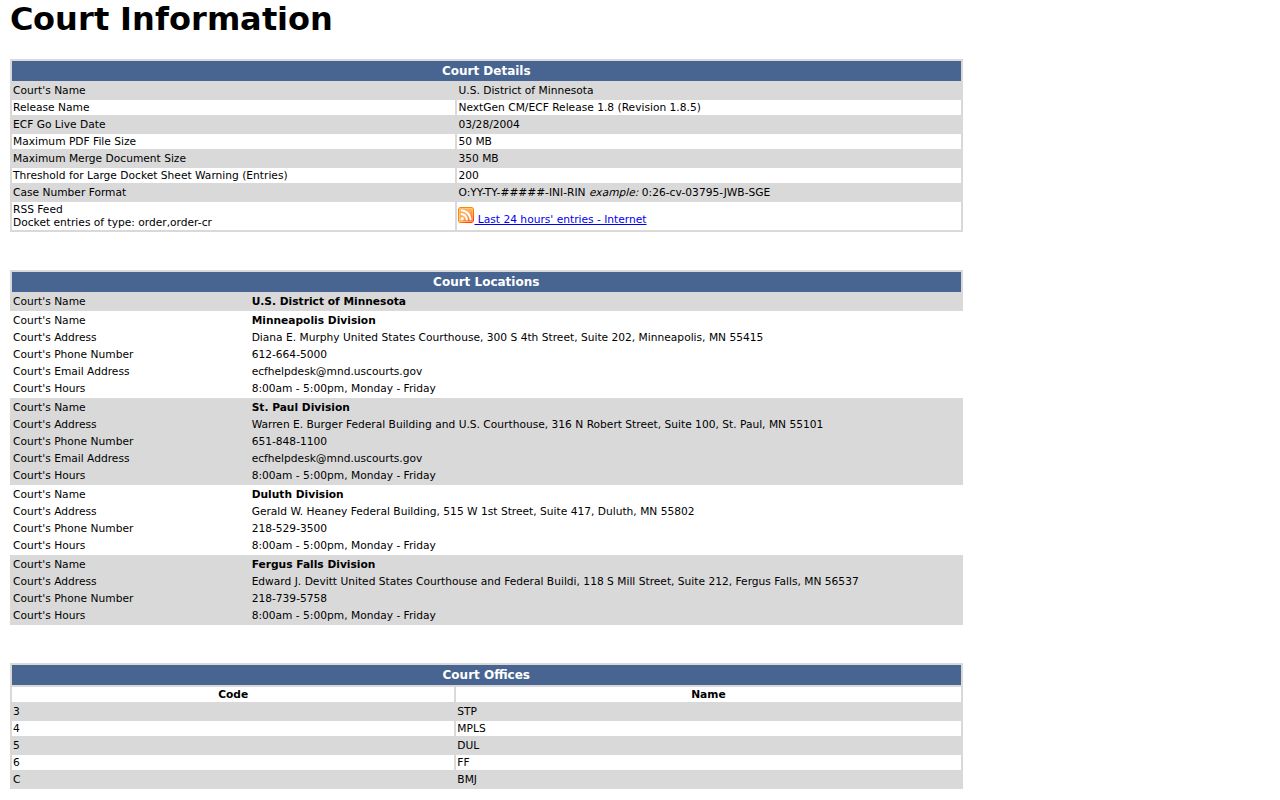
That separate route also keeps a failed MCRO search from looking like a missing federal case.
Map and Directions to the Duluth District Court
St. Louis County District Court is unusual in Minnesota for spreading full-service court administration across three courthouses. Duluth District Court, at 100 N. Fifth Avenue W. in downtown Duluth, is the largest of the three and the county seat location. Hibbing and Virginia District Court each keep their own local files and public-access records computers, so confirm which facility a case is assigned to before choosing where to go.
Duluth District Court
100 N. Fifth Avenue W.
Duluth, MN 55802
(218) 221-7560
Monday-Friday, 8:00 a.m.-4:30 p.m.
Hibbing District Court
1810 E. 12th Avenue
Hibbing, MN 55746
(218) 274-6007
Monday-Friday, 8:00 a.m.-4:30 p.m.
Virginia District Court
300 South Fifth Avenue
Virginia, MN 55792
(218) 305-7021
Monday-Friday, 8:00 a.m.-4:30 p.m.
Duluth has a metered parking ramp attached by skywalk. Hibbing offers a free surface lot and street parking with an entrance near the lot on 18th Street. Virginia also has a free surface lot and street parking, with an ADA entrance at Door 2. All three courthouses post printed calendars in public lobbies and outside courtrooms as the most current same-day source.